
 A 10×8 shed is one of the most searched shed sizes in the UK, and it is easy to see why. It gives you a decent amount of space without taking over your garden. But before you buy, there are a few things worth knowing, from roof style and floor strength through to build quality and what you can realistically fit inside.
This guide covers everything you need to make the right choice.
What Does 10×8 Actually Mean?
The measurements refer to the floor size: 10 feet wide by 8 feet deep, which works out at roughly 3 metres by 2.4 metres. That gives you around 7.4 square metres of floor space.
To put that in perspective, it is roughly the size of a small bedroom. It is enough for a workbench and tool storage, a ride-on mower, a decent amount of garden equipment, or a basic garden office setup.
Apex or Pent: Which Roof Style Is Right for You?
The two most common roof styles at this size are apex and pent. They look different, work differently, and suit different gardens.
| Feature | Apex Roof | Pent Roof |
|---|---|---|
| Shape | Pitched, like a house roof | Single slope, flat-ish angle |
| Internal headroom | Higher in the centre | Consistent throughout |
| Best for | Storage, workshops, general use | Side-of-house positioning, low-profile fit |
| Water drainage | Drains both sides | Drains to the rear |
| Visual style | Traditional | Modern, contemporary |
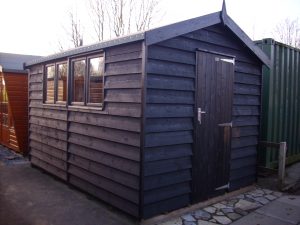
10×8 Apex Shed
An apex roof peaks in the middle, which gives you more headroom in the centre of the shed. This is useful if you are storing larger items upright, using a workbench, or spending any time inside. It also sheds rainwater effectively on both sides, which helps with longevity.
If you want a traditional-looking shed that works well in the middle of a garden or at the end of a lawn, an apex is usually the better choice.
10×8 Pent Shed
A pent roof slopes in one direction, usually from front to back. This keeps the profile lower and can make the shed easier to position close to a fence or wall without the roof clashing. It tends to suit modern gardens and more contemporary builds.
The trade-off is that headroom can feel a little lower, especially towards the rear of the shed.
What Can You Store in a 10×8 Shed?
A lot. Here is a rough idea of what fits comfortably:
- A full set of garden tools (spades, forks, rakes, hoes)
- A large lawnmower or a compact ride-on mower
- A workbench along one wall, with space to move around
- Bicycles (typically two or three, depending on storage setup)
- Outdoor furniture through winter
- Shelving for pots, compost, and smaller items
What does not fit well: a full-sized ride-on tractor mower alongside other equipment, or anything requiring a very wide turning circle. For larger machinery, you may want to consider a 10×10 or custom size.
Floor Strength: What You Need for Heavier Items
Not all shed floors are equal. A standard shed floor uses thin tongue-and-groove boarding, which is fine for light garden tools but will flex or fail under heavier loads over time.
If you plan to store a ride-on mower, heavy machinery, or put a workbench with equipment on it, you need a stronger floor. Look for:
- Thicker floor boarding (19mm or more is significantly stronger than 12mm)
- Close-spaced floor joists to reduce flex between supports
- Pressure-treated timber in the floor frame to resist damp from below
- A solid base underneath — a concrete slab or well-laid paving slabs prevent moisture rising and stop the frame shifting over time
A poorly built floor is one of the most common reasons sheds deteriorate quickly. It is worth investing in the right spec from the start.
Why Build Quality Matters
A 10×8 shed is a significant purchase. The difference between a shed that lasts five years and one that lasts twenty comes down to how it is built.
Here is what to look for:
Cladding thickness: Thicker cladding holds its shape better, resists warping, and keeps out the wind and rain more effectively. Thin shiplap can look fine on day one but gaps appear quickly as the wood moves with the seasons.
Frame strength: The structural frame is what everything hangs from. A heavier-duty frame with larger section timber is far more rigid and will not rack (lean or twist) over time.
Roof felt quality: Cheaper felt degrades within a few years. Better-quality sheds use thicker mineral felt or other roofing materials that last much longer.
Treatment: Timber that has been properly treated during manufacture resists rot and insect damage far better than untreated wood. Always check whether a shed comes pre-treated.
Joinery: Look at how the panels are constructed. Mortise and tenon or dowelled joints are stronger than simple butt joints held together with nails.
Do You Need Planning Permission for a 10×8 Shed?
In most cases, no. A 10×8 shed usually falls within permitted development rights, which means you can build it without applying for planning permission, as long as you meet certain conditions.
The main rules to be aware of are:
- The shed must not sit in front of the front wall of your house
- The maximum eaves height is 2.5 metres
- The overall height cannot exceed 4 metres (apex roof) or 3 metres (any other roof)
- If the shed is within 2 metres of your boundary, the overall height must be no more than 2.5 metres
- All outbuildings together must not cover more than 50% of the garden
For full details, the Planning Portal’s outbuildings guidance is the best place to check.
Rules may differ if you live in a conservation area, a listed building, or on designated land. Always check with your local planning authority if you are unsure.
Why Choose a Heavy Duty Shed?
If you want a 10×8 shed that will genuinely last, a heavy duty build is worth considering. Standard sheds are built to a price point. Heavy duty sheds are built to a higher specification throughout, from the frame and floor to the cladding and fixings.
Our Essex sheds range covers both standard and heavy duty options, all made in Danbury by craftsmen who have been building timber garden buildings since 1951.
For those who want the best of both build quality and classic design, our heavy duty apex shed is one of our most popular choices at this size. It uses a substantially stronger frame and heavier cladding than the standard range, making it a genuinely long-lasting building rather than a temporary solution.
If you want to understand exactly what goes into the build before you commit, the full heavy duty apex shed specification sets out the timber sizes, cladding thickness, floor construction, and roofing materials in plain detail.
Quick Buying Checklist
Before you buy a 10×8 shed, run through these questions:
- What am I using it for? (Storage, workshop, garden office, mower storage?)
- Do I need an apex or pent roof for my garden layout?
- Is my base adequate for the weight I will put on the floor?
- What cladding thickness does the shed use?
- Is the timber pre-treated?
- Does the shed come with a building warranty or guarantee?
- Does it fall within permitted development rules for my property?
Getting these answers before you buy will save you a lot of frustration later.
Talk to Us
Poulton Portables is based in Danbury, Essex, and has been making timber garden buildings since 1951. Every shed we build is made locally by skilled craftsmen, and we offer a wide range of sizes, styles, and specification levels to suit different needs and budgets.
If you are unsure which size or style is right for you, get in touch and we will be happy to help.