

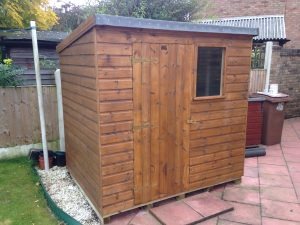
 Not all sheds are the same. Prices vary hugely, but the real differences are not always obvious from a photo or a product listing. If you are looking for a shed for sale in Essex, this guide covers what actually separates a quality timber shed from a cheap one.
Timber Species
The type of timber used is the single biggest factor in how long a shed lasts. Quality builders use Redwood Pine, a slow-grown, dense softwood with tight grain that holds preservative treatment well and resists moisture ingress. Cheaper sheds are often made from larch or similar short-life timbers, which absorb and release moisture more readily, leading to warping, splitting, and early decay. Always ask the supplier what species they use.
Frame Construction
A well-built frame uses properly sized joinery-grade timber with solid joints. Heavier-duty sheds use larger section timber — 44mm x 44mm or more — while lightweight frames flex and twist over time. Corner bracing or structural plywood panels inside the frame stop the building racking in high winds. Push the wall of any shed you are considering. A quality build will barely move.
Shed Cladding
Cladding is the outer skin of the building and your first line of defence against rain. Thickness matters: standard cladding runs at around 12mm to 16mm finished, while heavy-duty options start at 19mm or more. Thicker boards resist seasonal timber movement better and add rigidity to the whole structure.
Poultons’ standard cladding is ex 19mm x 125mm shiplap. Buyers who want lower maintenance or a more contemporary finish can also choose composite or PVC options. Full details on each type are covered on the shed cladding options page.
| Cladding Type | Typical Thickness | Maintenance | Warranty |
|---|---|---|---|
| Timber Shiplap (standard) | 19mm | Annual treatment recommended | Subject to treatment |
| Heavy Duty Feather Edge | 22mm | Annual treatment recommended | Subject to treatment |
| CanExel Composite | Engineered panel | Low maintenance | 25-year board warranty |
| Durasid PVC | Composite | Very low maintenance | Long-term durability |
Pressure Treated Timber
Pressure treatment forces preservative deep into the wood fibres, giving far better protection than a surface coat. Not all sheds described as “treated” are pressure treated — some suppliers dip or brush the boards only, which does not penetrate the full section. Ask specifically whether the timber is factory pressure treated before you buy.
The Base
Even a well-built shed will fail quickly on a poor base. It needs to be level, load-bearing, and either raised or drained so water cannot pool beneath the floor. Options include a concrete slab, ground screws, or a slab-and-bearer system. A good Essex supplier will advise on which suits your site and can usually supply and install the base as part of the job.
Warranty and Planning
Ask any supplier what warranty they offer and whether it is conditional on maintenance. Cheap flat-pack sheds often carry no meaningful structural guarantee. A quality timber building should come with at least several years of coverage as standard.
On planning: most garden sheds in England do not need planning permission, but rules apply around height, boundary distances, and how much of your garden can be covered. The Planning Portal’s outbuildings page at planningportal.co.uk covers the permitted development rules in full. Check before you order.
Buy from a Local Maker
A local supplier can visit your site, advise on specification, and take responsibility for installation — something a national catalogue retailer cannot do. Poultons have been family-run Essex shed makers since 1951, building sheds and garden buildings by hand from their Danbury showsite using quality Redwood Pine throughout. If you want to see the products before you commit, that option is there.
The short version: check the timber species, frame weight, cladding thickness, treatment method, and what warranty is on offer. Price alone is not a reliable guide to quality.